
Posts by Dan

    Nautilus has been making noise lately to get their NS "carbon" fins attention Nautilus NS Series Carbon Blades and Pockets New Batch!!! - Spearboard Spearfishing Community At an affordable $199.99 they appear attractive to those looking to upgrade to their first carbon blades.


    It's important that divers know what they're buying, especially when there's an attempted deception. Nautilus blades are Leader blades LeaderFins.com with a different sticker. This in itself wouldn't be a big deal, rebranding is normal in the industry. The foul as I see it is that along side the "NS" blades, Nautilus is selling the exact same blades at the lower price of $175 correctly labeled as Leader Nautilus Spearfishing – Miami Dive Shop » LeaderFins Carbon Steriofins Wave Blades Fins. The only reason I see for this is an attempt to confuse a potential buyer into thinking that the NS fins are more expensive and better than the Leader fins, in reality they are one and the same.


    Because Speardiver carbon blades are more expensive Speardiver carbon fins roll call I'm often faced with the same questions from guys who know about the Nautilus blades; why are Speardiver carbon blades more expensive? How are they better than the Nautilus blades? So I decided to post the answers in this thread.


    The cost of Leader / Nautilus carbon blades is cheaper than any other blades on the market period. You don't need to simply believe me, go to LeaderFins.com and see for yourself. The retail price of the carbon blades is 90 euro. The low retail cost reflects lower production costs, which is in part due to low labor costs (the blades are made in Estonia), as well as materials and production process.


    Leader fiberglass blades are not even worth talking about, they are so slow/have no snap, little if at all better than good plastic long fins. Leader carbon blades are fiberglass blades with two layers of carbon fiber, one on the top surface and one on the bottom surface. This makes Leader blades have the outward appearance of a carbon blade, and at the same time be durable but heavier and slow/with little snap/less reactive as compared to quality carbon fins. For those who don't know it's the lightness and tendency of the carbon blade to very quickly snap back to straight after being flexed, that makes the performance difference. Someone who has no experience with carbon blades, and is given the opportunity to flex and release one kind of blade alongside another, will immediately become aware of the difference.


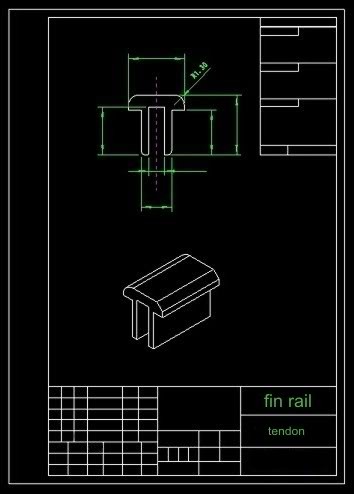
    Another important aspect of the blades is rails. Rails are the system which secures the blade in foot pockets. For an explanation of rails see this thread Fin blade rails, water channeling and tendon rails explanation Leader / NS blades have an inferior rail system with water channeling rails running the length of the blade. Then cutting down the height of the water channeling rails in the area where the foot pocket tendons grip. The resulting small rails appear like they would do the job of tendon rails, but in reality because they're not specifically designed for this purpose the rails are too thick to fit in the tendon slot properly. This results in poor grip of the foot pocket tendons over the blade, and the probability of the blade popping out of the tendons during a powerful fin stroke.


    All that said, Leader offers decent entry level blades in their "carbon" blades, which are definitely superior to any plastic longfins. As such I decided to add them to the Spearfishing Store product line, with improvement in some aspects and no misinformation.


    Stiffeness: Medium only. Soft from Leader are very slow and provide poor propulsion. Hard are stiff like boards.
    Color: Conventional carbon pattern only. The new Algae camo carbon blades include a layer of the colored stuff which is pretty but slows down an already slower blade.
    Rails: Original Leader water channeling rails, with Speardiver foot pocket rails installed to match exactly the length of the tendons for the foot pocket you are using.

    FinTendonRailSchematic-1.jpg


    Logo: Leader logo, no logo, a mermaid, whatever you want. Except Speardiver logo :)


    IMG_4082.jpg


    Price: $160
    Caveat: Don't ask me any more questions about these blades.

    It didn't damage your mech.


    Mech sears will catch and hold different notches than what they were designed to hold. Just because it seems to hold doesn't mean you should use a shaft not designed for that mech, it's not ideal and possible that the mech will release when it's not supposed to. That said there are euro shafts with notches that are more different to another euro shaft and have more potential for failure, than to a US shaft, and people use them interchangeably without giving it a second thought. In general though you will see a rounded sear for euro shafts, and a square sear for US shafts, it's visible through the forward part of the housing once you take it out of the gun. Fit also has to do with how long the small piece of shaft past the notch/at the rear end of the shaft is.


    In the end there's no substitute to inspecting closely how a particular shaft functions with your mech. I've made US shafts into euro shafts on a few occasions by cutting off the the back piece which includes the notch, and grinding/filing a new notch. When you do it little by little until it finally fits, you get ideal holding power IMO because you can make the tolerance very small. Basically you want to achieve a hair of distance between the flat part of the back of the shaft and the roof of the housing. If the shaft can't go up then it can't skip over the sear and you're safe.

    You're in the "tone" zone <img src= " class="smiley" srcset="https://spearfishing.world/forum/images/smilies/emojione/1f606@2x.png 2x" height="23" width="23" loading="eager" data-tooltip="biggrin" aria-label="biggrin">

    I've always been curious about what happens when a boat runs over a float line. Does the line get wrapped up in the propeller or just gets snagged and released? Does the speargun tend to hit the diver, or worse if it was pointing backwards does it stab the diver? Are some materials used for float lines more likely to get snagged or wrapped up than others? Is the length of the float line and where the diver or float are relative to the point where the boat runs over it a factor in how bad the outcome is? Although it's never happened to me, logically there are much higher chances for a float line to get run over than the diver. Anyone who's had or heard of this happening please share the story.

    IMO as far as propulsion, if there is a performance difference between the different front edge terminations it is so small that it's negligible, the edge can be straight and it won't matter much. The rest is eye appeal. I find that old timers like the rounded edge, I think it reminds them of the first longfins from Sporasub. The main reason for the different edges is product differentiation.


    In the case of the Pursuit fins, the C100 being longer and less maneuverable than the C90, I thought that the lack of corners on the front edge will make the blade a little less likely to catch on stuff when turning on the bottom. Also optically the round shape makes the blade look not as long as it really is, I like that because otherwise it looks really long.

    LOL it's the same fin Speardiver.


    How do you know that you were using the same stiffness fin in the pool that was demonstrated in the video? Was the blade twisted and bent in the exact same way in front of you? I'm sure that the blade in the vid is very soft. I've handled a lot of carbon fins from different manufactures, no fin with backbone will do that. And yes it will become apparent when you'll need to generate power in real conditions. BTW I do like and use soft fins, but not that soft.

    Don't be fooled, that's a very soft blade in that video, it would be a noodle in the water.


    My video has better music :)


    Freediving spearfishing carbon fins testing - YouTube


    I tried to remove the tab, as you can see in my pic it's long and extends deeper than I was able to reach with a dremel or a blade. It's at that point that I got pissed and tore up the footpockets. I don't think you'll be able to do it without damaging the bottom of the f/p.


    I'll come back to comment on the blade front edge shape.

    jdv, the suits come in 3mm, 5mm, and 7mm.


    Salvimar 4one is the same thing as Salvimar Delta one. Rebranded means the same product but with a different logo. Rebranded is still made by the original manufacturer, it's not a copy and so retains all the characteristics of the original product except the logo.

    So I decided to bring this thing to life, introducing the Speardiver "freeblades" :) I cut the tendons off H Dessault foopockets and reshaped them. I figured the blade will need more support from the bottom so I shaped a piece of starboard. It doesn't feel much different than a blade in Pathos footpockets. It will feel different once the water channeling rails are on. I'll try it and post back. Xan, you're welcome to try them.


    BTW if there's a fiberglass blade that can handle that kind of stress it's this one. If it breaks at the toe there's no usable blade in existence that will bear it.


    EDIT - See these fins in action here http://spearfishing.world/fins…kets-without-tendons.html