Posts by Dan
-
-
-
Yes, but you have to make sure they allow kayaks.
-
All Pursuit knives now come with a choice of straps; marseilles belt type straps w/ stainless steel buckles

or plastic quick release type buckles.
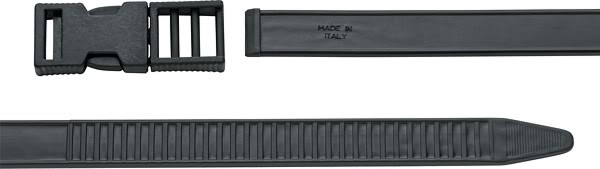
-
-
Moved to Florida section.
Please read this thread http://spearfishing.world/foru…earfishing-locations.html
-
I'd like to see the actual Miami regulations. There are a lot of regulations in Fort Lauderdale, but it's doable. There is always some confusion between speargun, and speargun must be unloaded, and no spearfishing within certain distance from the beach. You should really look into the Miami regulations. One way of beating it is going to an area that has no lifeguards, or going before they come on duty, which is 9am in Fort Lauderdale.
In the past I've considered designing a float that will conceal a speargun. A kayak does the same thing.
-
You're welcome, enjoy

-
I would've joined you but I have work to do. Here's a ready to go board for $25 http://spearfishing.world/for-…ng-board-knives-gaff.html
-
Welcome to the forum.
-
Unless you're sure because of previous experience, that you have a particular need for a softer or harder fin, a medium stiffness carbon or fiberglass fin is always the way to go. Achieving a medium stiffness fin does not only depend on the blade, it depends on the footpocket/blade combination, as some footpockets have stiffer tendons than others which affects the overall stiffness and flex of the fin.
Because of this the first step in the process of getting the right fin for you is determining the footpockets. If the footpocket doesn't fit well you can have the greatest carbon blades, but it will mean nothing if the footpocket doesn't fit right and/or is not combined with the right stiffness/flex blade. Once the right footpocket is chosen, the blade is matched to it.
Disregard the numbering on the footpockets as a guide to what size is right for you, use the numbers as points of reference only. If you don't have the possibility to try on different footpockets, your next best move is to talk to someone who knows how footpockets from different manufacturers fit. In this case you’ll need to provide your actual foot measurement. Put a ruler against the wall, and stand on it with your heel against the wall. Putting your weight on the foot ensures that it's spread out to maximum length. Measure where the furthest toe ends. Measure the width of your foot at the widest part in the same way. This is not guaranteed to get you the right footpocket but it will narrow things down to two or three choices.
-
I do the reverse. I rinse the suit inside out/open cell out first, and let dry completely. Then turn right side out/lined side out and let dry. Sometimes I don't even bother letting the lining dry completely, it will dry stored and will not adversely affect the suit.
-
As you can imagine I have many suits stored. I've never had a suit interior stick to itself with more force than what would be described as suction. I had one customer tell me about the open cell interior of his pants sticking, after using and storing it. But if I remember correctly the suit wasn't well stuck, he asked me about it more as a precaution before separating it, and it came apart without any damage. I also handled many of my suits after being used, and never seen anything even close to sticking. I have to assume that when the suit was used some substance was left inside that caused the sticking.
-
I agree, Jim has very good taste. I like the addition of the Bluewater hunters book, it supports the gun in just the right position and at the same time lends purpose to the composition. The Russian matryoshka doll in the background also adds a sense of the unexpected, as when finding a fish species on a dive that's completely not supposed to be there. The reel remains mysteriously nameless

-
That looks really good. Very well done Mike. This is one to keep in the bag of tricks. I wondered for a while already what can be dyed, pvc, other plastics etc.
Does the baking in the oven not weaken the material in any way? No part of it became brittle?
Will the powder stuff from Publix work the same?
-
Very nice Jim, congratulations.
You didn't say what reel.
-
Harry, you haven't tried on a Speardiver 5mm, it feels the same as the 3mm. Another thing is I'd like to measure the polosub thickness with calipers. If it's significantly warmer than the 3mm then it will be thicker than the stated 3.5mm.
-
That's interesting thanks. Looking forward to the pics, and seeing it in person.
-
First, we do use 5mm suits in south Florida in winter.
Your point about a lined suit becoming less stretchy and consequently less comfortable is valid when both inside and outside are lined. The Lycra used in Speardiver wetsuits is very stretchy and takes very little away from the stretch of the neoprene,also it's only on the outside of the suit. Ask anyone who's using a Speardiver wetsuit if they think a wetsuit can get any more comfortable. The 5mm suit feels almost the same as the 3mm if the correct size is selected. 7mm is going to be stiff no matter how you slice it, so it's not the fault of the lining. The guys who do use 7mm suits in the US as a rule are diving in conditions that would be too rough for a smooth cell exterior suit.
Thank you for the suggestion to add smooth cell exterior suits to the line. I've considered it before, as my goal is to offer a complete line, even gear that's used by very few but is necessary. I don't think %99 of US spearos would like it after they damage it. The %1 that are willing to pay the higher price, be very aware and careful with the suit, and not complain when it does tear, I'm not sure can justify production of smooth skin suits.
-
I often see questions about which kind of wetsuit is most suitable for spearfishing, more specifically about which wetsuit exterior is best. Also I got a couple of emails recently praising the Speardiver wetsuit's durability, which prompted me to do this writeup.
The two spearfishing wetsuit exteriors you'll find are: lined, and rubber. By the way Neoprene is a synthetic blown rubber, which is rubber containing many tiny air bubbles, and has excellent insulating qualities. Wetsuits with a rubber exterior simply have the material from which they are constructed ie. neoprene exposed on the outside. Such wetsuits go by exotic names depending on the manufacturer, like:
Smoothskin or Smooth skin
Slickskin or Slick skin
Slick
Sharkskin or Shark skin
Smooth neopreneI'm sure there are other names for it and if I find them I'll add them to the list. With all of them the outside facing surface of the neoprene from which the suit is made, has been processed to be smooth. The processing does not make the surface any more durable than the inside. This is what a rubber exterior suit looks like, although nowadays it can have colored patterns including camouflage. These patterns are painted on no differently than if you were to take acrylic paint, and sponge it on to the wetsuit exterior.

A small advantage of a smooth rubber exterior is that the suit is more hydrodynamic than a lined exterior suit whose porous material creates a miniscule amount of drag. Another difference is that when out of the water the rubber exterior suit doesn't cool down when exposed to wind, as a lined exterior suit does when the water trapped in its porous material evaporates. To me that's not really an advantage, first because the cooling effect is small, and because when out of the water on a hot day wearing the suit I want it to cool down anyways. On a really cold day on a boat I'll just throw on a wind breaker.
The obvious disadvantage of the rubber exterior suit is that it's EXTREMELY sensitive to tears. So sensitive that no smooth skin wetsuit manufacturer will warranty the suit against any kind of tear other than seam failure. Forget about putting your knees on the reef as you're lying in wait for a fish, or getting on a boat seal style if the gunwale is not free and clear of anything that could snag the wetsuit. The smooth soft surface of a rubber exterior suit has a spongy grabby quality (even more so when the suit is dry) that lends itself particularly well to being snagged on the smallest protruding object. Once it's snagged a tear right through the suit is guaranteed.
With an exterior lined suit, nylon or Lycra is glued on the neoprene. Lycra being the best because it's more stretchy than nylon which translates into a more comfortable suit. The lining allows color patterns such as camouflage to be added to wetsuit.
Speardiver Predator wetsuit

The outer lining adds great durability to the suit. There are big differences in the lining's resistance to abrasion and cuts, and color fastness, depending on the manufacturer. Consider the following emails from two different Speardiver wetsuit owners. If this had been a rubber exterior wetsuit in those conditions it would've been shredded, and the diver probably cut.
1st email.QuoteThese were my first abs of the season this year. I will definatley have better quality pics and bigger abs within the next couple of weeks. The suit is great. I have friends with omer and esclapez and so on, and they already have rips and tears in them from diving up on the Norhtcoast. I have entered and exited the water over rugged rocks and my friend with an omer entered and exited the same spot and tore his. Im heading to maui in june and I am definatley going to buy the 3mm Bluewater wetsuit.
2nd email.
QuoteI forgot to tell you about an incident I had. I was hunting near some rocks and a huge wave came over me and knocked me into them. I ended up getting tossed all over some really sharp rocks. I was in a lot of pain, so I was sure the suit was ripped, but when I took it off, I could barely see any damage. I can see some very small tears in the nylon if I stretch the suit, but the tears don't go through the neoprene. Unstretched, I can barely see any damage. This is amazing because I ended up with multiple scrapes and bruises, a lot of which actually broke skin. I'm still bruised in some spots.
In conclusion smooth rubber exterior wetsuits have a place, for competitive freedivers and swimmers, but are not a good choice for spearfishing because they're extremely sensitive to tears. Unless you're very experienced with smooth skin suits, and are diving in conditions where contact with anything can be minimized to zero, you're guaranteed to tear the suit.
All Speardiver wetsuits are made for spearfishing, with very durable Lycra outer lining and effective camouflage patterns. They are available from www.FreediveStore.com