

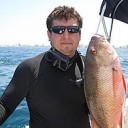
Being able to load a gun on your abs depends on your strength and the length of your arms. If you use proper technique length of arms may not be a factor. You do not need a butt extension for chest loading, the butt extension is for hip loading. The length of a 110 with a butt extension is close to a 120 without an extension. You should be alright with a 120.
Posts by Dan
-
-
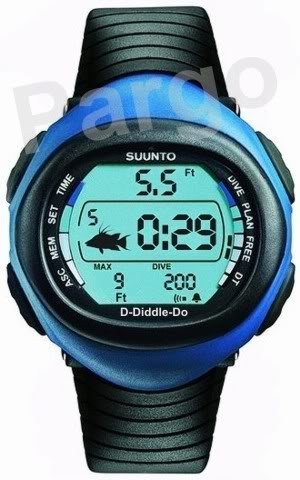
Mine also keeps track of the fish I shoot <img src= " height="23" srcset="https://spearfishing.world/forum/images/smilies/emojione/1f606@2x.png 2x">
-
Have you ever had a fin fail completely? If so how?
When we're talking about durability and strength it would be helpful to define the point at which we consider the blade to have failed. Obviously if it breaks in half or breaks along the screw holes line it would be considered a complete failure. A strong hit perpendicular the front edge of the blade will likely chip all blades. Cosmetic scratches will happen immediately when reef bottom hunting. So what kind of durability are we looking for exactly?
With the carbon blades for example I believe no kicking effort in open water will break the blades. I also believe no impact such as jumping into the water off the boat will break them. Weight being thrown on top of them will also not break them unless the blade was placed on it's side edge. What can we do underwater to make the blade fail? Push off the bottom possibly? I would like to devise a test with input from you guys and am willing to put a pair of carbon blades and a pair of kevlar blades through it.
-
Cost will be the same as carbon blades.
-
This may be new to some of you or not so new to others, carbon kevlar is a material that can be used to make fins. Some manufacturers are experimenting with kevlar and it may be the next trend. It is said that the carbon kevlar material is superior to carbon as far as strength and durability but is just as light. These are the carbon kevlar fins we are now sampling. The format (length, width and shape) is the same as our carbon blades. I used a digital scale to weigh the blades, the CK is 314g vs the carbon at 304, only 10g heavier. I don't think I'd be able to feel 10g if it was put in my hand. To talk about durability I don't know what I'd have to do to the blade to test it. You've seen me drive over the carbon blade, I'm sure the CK blade will take it no problem.


Looking at the pics you will see that surface of the blade has a checkered pattern. What you're seeing is the carbon interweaving with the kevlar. The carbon is black and the kevlar is light green. Kevlar can be made in a variety of colors which will allow for very interesting product differentiation from a manufacturers stand point. These blades are just samples that were not made to our specs, so I can't make a final call on the qualities of the blade. If we were to go with it we would use this material instead.

All in all kevlar presents some very interesting possibilities for application in fins.
-
Yeah, I thought it was rather lanky for a bull.
-
Thanks Davie. Nice people. I would've kept the shark though

-
There's nothing better than the real thing
-
I lost one fin north of Haulover inlet. It was in an H Dessault footpocket size 42-44. Since no one can really use one fin maybe if someone finds it I'll get it back. It was on the second reef line.
-
Or a good demonstration of skill. But yeah, looking at Griffin in this fight you wouldn't think much of him.
-
It was for PC. The graphics were very simple. You got to weigh your catch in the end. The game wasn't worth playing or keeping.
-
When your fins look like this you don't forget them <img src= " height="23" srcset="https://spearfishing.world/forum/images/smilies/emojione/1f606@2x.png 2x">

-
Wow, Silva made it look like one of those sparring sessions where you feel zero threat from your opponent and are just out to practice your skills. I don't know if he's just that good or that Griffin had a terrible day.
-
Wow! Why the hell would it jump? Heard of rays doing it but never sharks.
QuoteDisplay MoreAfter a day of spear fishing and lobster diving, a group of boaters got the scare of a lifetime when a shark jumped onto their boat, WSVN-Ch. 7 reports.
Michael Powers and his friends were on board a 21-foot boat Saturday when a shark decided to pay them an unannounced visit. The 5-foot bull shark injured itself after violently flopping around the boat, WSVN reported.
"One minute it was in the air, the next minute it was in the boat just beating everything in God's creation," Powers told WSVN.
It took about 30 minutes for the shark to calm down and stop breaking things in the boat. The boat suffered very minor damage, WSVN reported. No one was injured.
-
Thanks for reminding me, downloading it as we speak..
-
I once tried sunblock while diving, never again. Somehow it got into my eyes and I was blind for 15 minutes. We were switching drivers at the time and when my vision came back I had like 5 minutes left in the water before it was my turn to drive

-
I got burned by a Portuguese man of war really bad once. Since then I always dive with full protection even if it's only Lycra top and pants. Yet I see many guys diving in shorts and T-shirts. If you're wearing full protection, when you consider what's left exposed of your head between the wetsuit collar, hairline and mask it's not much really. I've gotten a mustache burn (under the mask on the upper lip) before and it's tolerable. If you're bald I could see the problem
-
Yeah, when we do that it even bothers me when I'm in the water.. thinking that the driver is getting antsy and will soon come over and tell me it's my turn to drive
-
I've said before that I don't like wearing a hood. I started diving with no wetsuit, and when I started using a wetsuit it was always without a hood. I've since tried wearing a hood a few times on cold days and always felt restricted and unable to sense the environment properly. This is probably partly psychological but mostly due to the inability to hear. I figure I lose about %90 of my hearing wearing the hood. I tried putting holes in the hood at the location of the ears but it didn't help much. Until now my reasons for not wearing a hood have been personal. I concluded that it's a trade off between feeling comfortable hearing stuff and being cold. I figured that when it gets cold enough the cold factor will override the loss of hearing and I'll do like everyone else. But I didn't take one thing into consideration.
Diving out of Miami the biggest danger to us is boats. I've been buzzed by boats countless times, a few times as close as 30ft. Once I had to stay down longer to let the boat pass directly over me. My main defense against boats is early detection. I've developed a pretty good feel for when the boat is near, far, getting closer or moving further away by listening to the sound of the motor. I've learned to distinguish between the sound of airplanes and boat engines, sometimes they can sound similar. When I'm pretty sure the boat is far off I don't even raise my head out of the water. It's become somewhat automatic that I can distinguish the sound of a boat that can be a risk to me. It's important to never get complacent about the sound of a boat motor. This does impede relaxation and often does not allow diving to my full potential. It most often happens diving from the beach while crossing what I call no man's land; the line between the beach buoys and the second reef which many boats prefer to take. It is especially dangerous on weekends and holidays due to the increased boat traffic, I refuse to beach dive on such days.
To make a long story short I was diving with a hood. I wasn't hearing anything and then suddenly I felt something which I perceived as a faint buzzing in my throat area. It didn't sound like anything I've ever heard before but it made me instinctively raise my head out of the water. What I saw was a boat at full speed heading right towards me. It was maybe 100ft away at that point and all I could do was stare at it in disbelief. The boat then passed 20 feet away from me and never slowed down. It was a surreal moment. I used to have thoughts of diving to avoid an oncoming boat in just such a situation, believe me when I say there was no chance of that. The best chance we have of avoiding a boat is noticing it early on, judging its trajectory correctly, and taking early evasive action. IMO the hood significantly cuts down the possibility of doing that. When diving in an area where boat boat traffic is a constant reality I believe wearing a hood is dangerous.
-
Welcome to the forum.