

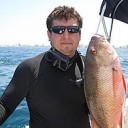
No I never used it. I think it's a little big but good for someone starting out not wanting to spend crazy money on gear, or an extra knife to have lying around on a boat.
Posts by Dan
-
-
I know I never finished this writeup, frankly I got tired of arguing about this point. But I thought I'd throw out the following bit of information. The only known "soft" tendon footpocket in production is the Pathos footpocket. It is the footpocket referred to in the medfish forum as the one that exemplifies the idea you're promoting, that soft tendon footpockets are better. Well, we're now communicating with Pathos to see if we can sell their footpockets. I recently spoke with the owner and was told that they are now manufacturing a redesigned footpocket. Redesigned with stiffer tendons in response to the feedback they've been getting. Their old footpocket tendons were too soft.
I will grant you this though, some footpockets can have tendons that are too stiff. I realized this after switching to the Dessault footpockets from waterways. In this case though it's not that the Dessault tendons are soft, they're normal, and it's the waterways that are a little too stiff. Really it doesn't matter because the stiffness of the tendons changes the overall stiffness of the fin. Some waterway footpocket and blade combination may be just the right overall fin stiffness for someone. I do believe though that rather than jump around and mix and match blades and footpockets, it's better to pick a good comfortable footpocket with normal tendon stiffness, stay with it and try to achieve the right fin stifness for you by varying the blade.
-
Check the downloads section. There are a few things there about spearfishing regulations that may shed some light.
-
-
-
That's a Speardiver trigger mechanism.
You should know if the mech is steel just by looking at it. If it's not rusting then it's stainless.
-
Agreed. I'm pretty risk adverse, but have made a couple piss-poor decisions in shallow water that made me wonder later "WTF was I thinking?!!"

Care to share a story or two?
-
Well, I did say that for me it's zero risk. I don't know about experience it's all relative, what I know is how I feel. I know how much time I got from the moment I start to feel uncomfortable underwater, and there's a little more of a safety margin when the adrenaline kicks in. I never breath up to the point of being sleepy in 30ft, it's just not necessary. A risk that I will not take in any case is going into a cave, I'm very conscious of the possibility of getting stuck.
-
A trigger mechanism made completely of stainless steel is a starting point. We're talking trigger, sear and housing. With a design like this Speardiver Top Line Release Trigger Mechanism nothing can go wrong.

-
Cuba Linda by Alfredo Rodriguez
<object type="application/x-shockwave-flash" data="http://flash-mp3-player.net/medias/player_mp3_maxi.swf" width="164" height="20"> <param name="movie" value="http://flash-mp3-player.net/medias/player_mp3_maxi.swf" /> <param name="bgcolor" value="#F4F7F9" /> <param name="FlashVars" value="mp3=http://www.freedivingspearfishing.com/aud/cubalindaar.mp3&autoplay=1&loop=1&width=164&showstop=1&showinfo=0&showvolume=1&bgcolor=F4F7F9&bgcolor1=4BACC8&bgcolor2=2A6085&slidercolor1=ffffff&slidercolor2=CCCCCC&sliderovercolor=ffff00" /> </object>
-
Actually diving shallow is where you do need more weight. You're much more likely to scare the fish on descent so you need to make it as smooth as possible. Hard to do when you're buoyant. Also although others might say that a blackout can happen anywhere, I believe that for me there's zero risk of blackout diving 30ft. I'm always a few seconds away from the surface and I never hyperventilate during breath up to the point of not knowing when I'm dangerously low on air.
-
I had this conversation with Pantoja once and I seem to remember we agreed. While the conventional wisdom on weighing oneself correctly when diving deep is being neutral in 15ft? I tend to weigh myself such that I'm slightly negative at the surface. The idea is that I need the weight most to make the initial part of the descent smooth when I'm going after a fish. That is where I make the most use out of the weight. Of course this means that if I black out at 10ft right back down I go. But compared to the very small possibility that I'll black out the constant use of a smooth descent seems more important. I should play with it some more and see how hard it is to break the surface when you're slightly positive. I can't remember being positive on the surface since I started diving.
-
hmm I haven't dove without weights for a long time so I can't remember what it's like. You see I learned the hard way that it's necessary to wear environmental protection ie a wetsuit or at least rash guards. Much of the time it's a wetsuit and that will increase your buoyancy and necessitate the use of a weight belt otherwise it's too much of an effort to break the surface and dive the first few feet. Now in just swim trunks it may be fine. Just stop at 15ft and see if you sink or float. If you're neutral then you're good.
-
Welcome to the forum. Which one of the dudes is you? You'll find a bunch of helpful guys here. I'm somewhat of a simpleton when it comes to diving. My advice to you is to work on relaxing at the surface, it's all in the breath up. Clear your head of all worries, being able to get to the fish, blackout, sharks, whatever.. and relax. Depth will come with time and your desire to reach whatever interests you down there. It's mostly psychological. Although nice carbon fins help <img src= " height="23" srcset="https://spearfishing.world/forum/images/smilies/emojione/1f606@2x.png 2x">
Oh and being weighed correctly so you'll float up from 15ft.
-
-
Very nice AP. I've never gotten one but I'll take a guess on the weight, 30lb? How was the viz?
-
But then you won't know who you're aiming at if they pass to your right while you're filming. Better unload the bands.
-

I asked scott today if he had ever had his RA accidently fire with the safty on and he said no. He said "why?' I said good, cause if you see me pointing my gun at you I'm taking your picture. He said "glad you warned me" <img src= " height="23" srcset="https://spearfishing.world/forum/images/smilies/emojione/1f606@2x.png 2x">
I know you're joking hau but it prompted me to write this http://spearfishing.world/spea…ns-misfire.html#post13993
-
I think it's time to bring this issue out in the open. Rob Allen is the economy and sometimes straight up speargun of choice for many divers, but this doesn't mean it's a quality speargun. Rob Allen spearguns are known to self discharge. If someone happens to be in front of it when it does.. you know the deal http://spearfishing.world/spea…atch-where-you-point.html.
I've been witness to one such accidental discharge. Hector's Rob Allen went off on it's own and the shaft shot into the reef. I remember hearing it go off and thinking someone just shot at a fish. I looked behind me and saw the shaft stuck in the bottom 15ft away.
Recently a friend who is also on this forum told me that his rob allen fired by itself. He got the mech replaced. Apart from these two incidents that I know about personally, I've read about rob allen spearguns discharging on spearbored. This is enough evidence to show that it's a recurring problem.
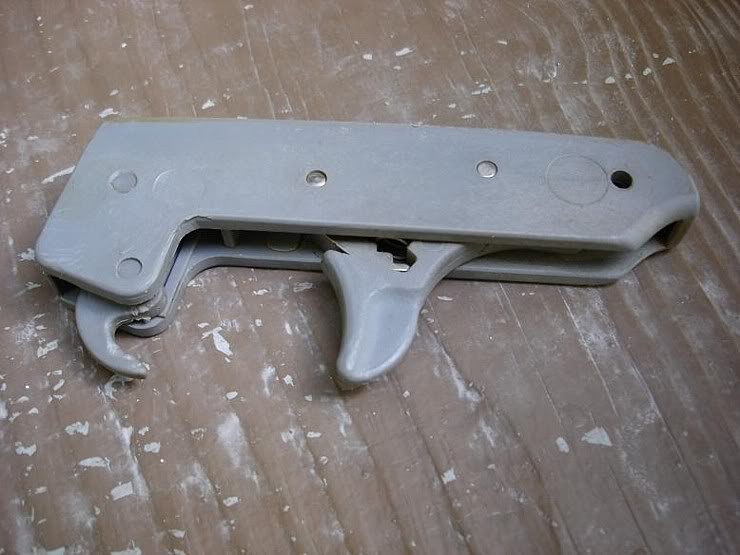
Here's a picture of a rob allen trigger mechanism, as you can see it's mostly plastic. I think a speargun trigger mechanism should be all stainless steel. A trigger mechanism is not a component where you try to lower production costs at the expense of safety.
-
I don't think you plan to beach dive Marco? and diving from a boat you can bring back quality fish. You may be disappointed with the viz though, unless you regularly go south of Miami.
I haven't been diving here long but this is the way I see it with regards to your question about depth. The 1st and 2nd reef lines are accessible swimming from the beach from Miami to Ft Lauderdale and are like 45ft max depth. Those areas are heavily frequented by all. There are some spots that produce fish more than others but they are all public. In those areas you can get fish at times of year when there's less people in the water (winter) and when there's movement of specific fish. Like spawning of mangroves or influx of cobia. At other times it can be pretty dead but this is also true for all spots off Miami.
When you're getting to 60ft and deeper your doing either the 3rd reef line or wrecks/artifical structure. Small deep spots like wrecks and other artificial structure hold fish and are accessible to much fewer freedivers but they're frequented by scuba spearfishers. Consequently they can be barren depending on the popularity of the spot. Deep reef areas (60-80ft) are large and not targeted by anyone that I've seen. You can drift dive those areas and they will produce.
Generally speaking everything will produce here you just have to hit it at the right time. The viz however is a constant nuisance and to some degree also current but we do get great days sometimes.
Of course living in Miami you're within driving distance from the keys. Over there I believe it's just a matter of knowing your spots for some phenomenal diving and spearing.