

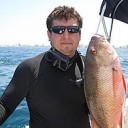
I'm not sure but I think blackout doesn't necessarily have to do with hiccups. I believe it can happen when you're feeling quite comfortable.
Posts by Dan
-
-
Thanks for posting that. Unlikely as it seems if there's a possibility for something to go wrong it will, that's been my life experience. I've had my knife catch mono on the bottom once. I wasn't too bad on air and just untangled the mono. I can tell you that even light mono, whatever they use to hook fish with, you will not tear by pulling on even with a gloved hand. A knife has to be within easy and instinctive reach. That's why since then I wear my knife on the inside of the calf. It can still catch mono but much less likely. Now that you took pictures of the cips cut those fucking things off.
-
To be continued.


-
The following email
_____________________recording available of
SEMINAR FOR PUBLIC INPUT
June 15, 2009See the recording of the ONLINE EDUCATION SEMINAR
The time has come to try something new.We have a recorded education seminar online at http://www.ustream.tv/recorded/1664123 .
Go to FRA Education Seminar
www.thefra.org/educate.htm for the supporting documents.
Watch a recording of the broadcast (only 25 minutes) to learn about what our strategy is for Wednesday's public input. The education seminar, hosted by Denny O'Hern, aims to help you understand the issues and focus your message. All supporting materials will be available for download directly below the broadcast screen during the seminar.
It is OK to share this link with known FRA supporters. This is an attempt to thwart the government and enviros from knowing what we are doing. -
It is clear then that the footpocket adds stiffness to the blade, and that in terms of overall stiffness and flex the blade and footpocket need to be considered together. The central argument to which I'm responding in this thread is "If a blade with perfect stiffness and flex characteristics can be obtained why not remove the footpocket factor from the equation?" or in other words why not have a footpocket with tendons so soft that they do not at all affect the flex of the blade itself?
-
The first step to understanding the dynamics of the fin is to understand why correct blade flex is important. Compare the two drawings of the fin profile at the middle of the down stroke.

A blade flexing in this manner is not doing a good job of moving the diver forward. This kind of shape results from overpowering any blade. Overpowering the blade happens much more easily when the blade or the blade/footpocket combination is not stiff enough. When the fin acquires this shape it moves through the water easier resulting in reduction of kicking effort, but at the same time it propels the diver forward less.

This picture demonstrates better flex. Only the tip of the blade is curved up. Most of the blade surface is still pushing water moving the diver forward. At the end of the down stroke the blade will snap back into straight quicker giving the diver some extra forward push.
The ability of the blade to maintain correct flex depends on a few factors. First there's the structure of the blade itself which includes two factors, stiffness and incorporated flex. These two factors are really one but for purposes of discussion I'm going to separate them. Stiffness is easy to envision as in the case of a blade that is made from one uniform piece of fiberglass. In such a case the blade can be as stiff as you want it and will theoretically flex in a perfect arc because of its uniformity. It's been demonstrated that an arc is not ideal for propelling the diver forward therefore flex is incorporated into the blade. The way this is done is by varying the thickness of the blade from thickest at the back to thinnest at the front. The front being less stiff will then flex first/more than the middle of the blade if proper kicking form is maintained.
The other factor in maintaining correct flex is the footpocket.
IMO the most accurate way to control blade flex is by tooling the blade. Tooling means that layers of fiberglass material are sliced off in a specific pattern creating a gradual change in stiffness from the back of the blade to the front. This slicing of material is computer controlled and is very precise creating very gradual variations in flex that are impossible using other methods.

The alternative to using tooling to create a gradual decrease in stiffness from back to front is through the laying of the fiberglass material itself. With the DiveR blades this effect is created by incrementally receding the layers of fiberglass towards the back as seen in this pic with the light shining through the blade. This method creates a gradual enough decrease in stiffness so as to create good flex over a long blade.

The Edge blades try to achieve this with a criss cross pattern of laying out the fiberglass. This method does not create a gradual enough decrease in stiffness from back to front. The blade bends in an arc if pressure is applied at the tip. This blade would have very poor flex characteristics had it not been for the footpocket factor. The footpocket and tendons stiffen up the back and middle of the blade in a gradual enough fashion so as to give the total fin acceptable flex.

-
My premise in this thread is to dispel some ideas about the benefit of soft footpocket tendons. This/my conclusion is based on having experimented with various footpocket/blade combinations and actually having felt the difference. Here I'm just trying to bring the idea across and the reasons for it. It's not easy to put in words but if you were to actually try the footpockets with the soft tendons you'd immediately see what I mean.
In my testing I used 3 different stiffnesses of carbon blades:
soft - medium soft (didn't have) - medium - medium hard
I used 2 different kinds of footpockets:
Waterways (Sporasub clone, normal tendons) - Other brand (soft tendons)** I tried all pairs of blades in both kinds of footpockets, all pairs of blades with each blade in a different footpocket (at the same time), and combinations of different blades and footpockets for example a medium blade in a normal tendon footpocket on the right foot and a medium hard blade in a soft tendon footpocket on the left foot.
-
There will probably be a slight difference but not to the extent that you see in the pics. The tendons of the soft footpocket in the pics are very soft to begin with, that's why I used it to demonstrate the difference. They are so soft that I will not sell them. They negatively affect the performance of the fin.
-
The boat is pretty high but I'll try handing it up sideways next time.
-
Also congrats on being picked to test it out. I too love getting new free stuff to try out

Nice thing would be if you could put on the motor out on the water. Maybe you can keep it under a tarp or something until you're out there, this way you can launch from public beaches. I understand that once a boat has a motor the lifeguards don't allow it.
-
Looks slick. But isn't that cheating the whole purpose of a yak? :poke:


-
email I received from the FRA.
_____________________The time has come to try something new.
We will have a live education seminar online on TONIGHT at 8 PM.
Go to FRA Education Seminar
www.thefra.org/educate.htm is the url
The password is:
nmfssucks
all one word, lower case.Join us tonight for a live broadcast about what our strategy is for Wednesday's public input.The live education seminar, hosted by Denny O'Hern, aims to help you understand the issues and focus your message. All supporting materials will be available for download directly below the broadcast screen during the seminar.
It is OK to share this link and password with known FRA supporters. The password is an attempt to thwart the government and enviros from knowing what we are doing.TAKE ACTION NOW:
Start to call your congressmen, senators and governor. Urge them to watch the public input LIVE on the FRA website. www.thefra.org/fisheyewide.htm -
Yep, this is the one you're referring to.

-
Ahh..
-
Quote
The 5/8 bands are closer to 18 mm so when I use 16 mm I just make them shorter.
5/8" = 0.625" = 15.875mm
I just used calipers to measure the diameter of my 5/8 bands which are from this order http://spearfishing.world/spea…sing-water-intrusion.html and they are exactly 16mm. When I speak of band diameter I use 5/8" and 16mm interchangeably.
It's what people call a 20mm band that's not accurate. It's manufactured as a 3/4" band.
3/4" = 0.75" = 19.05mm.
So in actuality people call a 19mm band a 20mm. I guess it sounds better.Only with European made bands I've heard of variations from the standard 16mm and 19mm band diameter. Of course I could custom order any diameter here in the US.
-
You can do magic with that derlin
-
If you're in the water handing off your gun to someone in the boat, do you give it to them spear point up or butt up? I give it point up and I have good reasons for it. I believe that the person on the boat is in a better position to make a tactical approach to the gun (so as not to get poked) and if there's a sudden change in the position of the gun due to wave action/boat movement the man on the boat is also in a better position to take action to avoid the point of the gun. It's also possible that the man on the boat slip reaching for the gun and while seeking to brace himself inadvertently push down on the gun which in turn will poke the diver. For these reasons I don't mind at all taking guns from guys that are handing it to me point up. I can choose to grab it when I'm sure it's safe. Also when I hand it point up it doesn't mean I'm pointing the spear at the person, I angle it away from them.
-
Here's the latest addition.
Sling.

The designer doesn't have much experience with slings, the pistol grip for a sling doesn't work well. You don't actually have to try and hit fish with it to figure that out. Just pull the bands and you will see that the force is exerted above your clenched fist which puts a lot of pressure on the wrist. It's uncomfortable to maintain this position and aim.
-
7mm shaft, two 16mm bands (special bands with small ID).
The other day I shot a grouper at close to the end of the mono, I use a double wrap. The shaft didn't go in past the flopper and simply pulled out. This made me realize that towards the end of the gun's range the shaft doesn't have enough momentum / not enough band power. This is a rare situation as the vast majority of shots are closer. This lost grouper made me think of adding a 14mm band for a total of 3 bands.
-
Loctite? The loctite I know is for keeping nuts and bolts together. It has practically no adhesive properties when it comes to rubber.