


Nice pics! How deep is mark on the bottom?
Posts by Dan
-
-
The front edge shape could have an effect on propulsion, but in the case of rigid fiber fins that don't bend at all around the length axis, it's so small it's insignificant for our purposes.
Surface area does have an effect. Some front edge cuts create the optical illusion of the blade being as long as others, but lose too much surface area.
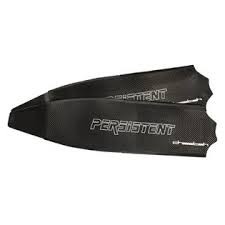
Mostly the different shapes are for product differentiation. Some manufacturers go to stupid lengths to be different, like the Persistent fins with their two "horns". I laughed when I first saw this, of course those points are asking to be broken. Sure enough a few months later they reduced the length of the horns.
Before.....................................After

In the case of the longer Speardiver C100 fins the rounded edge shape helps prevent the fin corners from catching on bottom structure, making the already less maneuverable fins (due to their length) more manageable.

-
71lb! beautiful cubera.
Marco's son is wearing the new Speardiver kids size spearfishing wetsuit Speardiver Kids Spearfishing Wetsuits.
Oscar from Miami, Speardiver Predator wetsuit
-
<img src= " class="smiley" srcset="https://spearfishing.world/forum/images/smilies/emojione/1f606@2x.png 2x" height="23" width="23" loading="eager" data-tooltip="biggrin" aria-label="biggrin">
-
Quizas penso que estas hecho santo

-
Los dos
Esta misma boberia surje de nuevo cada 10 años.
-
<img src= " class="smiley" srcset="https://spearfishing.world/forum/images/smilies/emojione/1f606@2x.png 2x" height="23" width="23" loading="eager" data-tooltip="biggrin" aria-label="biggrin">
-
Beauty of a fish. Water is so green, I wonder if the video would look any better if you used a magenta filter for the Gopro. How deep was that wreck?
-
It's an older style euro gun without a rail/track, made for plinking small mediterranean fish, so I don't think you'll find anyone here using it.
Handle has a good angle, so it should be comfortable to move underwater. Trigger and mechanism casing is plastic, so don't expect it to be very durable.
-
I'm glad you found your calling Stevo
-
John, I ran a time test on this light. I checked it 4 hours after I left it on, and it was significantly less bright, maybe %40. I checked again after 8 hours, and it was down to approx %10. After 10 hours it was pretty much the same so I turned it off. I thought that was it. But this morning I had to put the 2 flashlights away, and couldn't remember which was the one I let run down the batteries, so I flicked them on again. I was surprised to see that the light intensity was practically the same. I had to really take a close look at the beam to see which was less bright. The one with the supposedly run down batteries was at %90 - %95. I can only assume that there's a safety timer built into the light that automatically lessens the beam intensity after the light is left on for a while. Simulating a situation where the light is left turned on by accident, so the batteries don't get discharged. I don't have time to turn the light on and off every half an hour all day, so when I get a chance I'll take a closer look at the specs to confirm my conclusion.
-
Bottom fish can move fast enough to be skewered twice by one spear.
As a rule if you shoot at a fish that's facing you directly, you'll end up with a side shot fish.
-
This is the light Lunkerbuster's talking about Speardiver Spearfishing Flashlight

Testing out the 220 lumen Speardiver Spearfishing Torch - YouTube
-
Excellent pics. And good on you guys for getting out.
-
Why would you say that?
What a good kid. Barracuda can be a difficult fish to clean, he did it like a champ.
-
Very cool pics! Which camera are you using? Don't tell me these are Gopro frame captures.
-
I have polarizer filters for your cam in plastic and glass. There's been a price drop on them recently.
-
Which Gopro do you have Frank?
-
If you want something good, you have to put in a little effort and go off the beaten path, just like spearfishing. If you follow the rest of the sheep to the supermarket to get your nutritional needs, you won't be doing yourself any good. I stay away from packaged/processed foods whenever possible. When I see the price of a bottle of honey in the supermarket ($5 - $7) I considered the possible cost of production and the supply chain (where everyone has to make a cut), I then realize it's doubtful it contains anything good because of how cheap it is.
I then googled something about store bought honey being healthy, and that article is the first thing that came up. I immediately checked Craig's list for local honey suppliers.
-
Richard Schiffman: Most Store Bought Honey Isn't Honey According to the FDA
QuoteDisplay MoreSince ethical journalists disclose their biases, I'll tell you mine straight out: I love honey. I even put it in my morning coffee, making an ordinary cup of Joe ambrosial.
I like honey for the taste, sure, but I also love the fact that, unlike refined sugar, honey -- provided it hasn't been subjected to high temperatures during processing -- is infused with all sorts of good things like vitamins and minerals, antioxidants and living enzymes. Honey also has a lower glycemic index, hence it has a more gradual and healthier release into the bloodstream than sugar. Moreover, it has antimicrobial properties, and has even been used to treat diabetic ulcers and certain antibiotic resistant infections.
Finally, I love honey because I am a great fan of the industrious and beneficent bees that make it. Or do they?
That is the question raised in an eye-opening new study published by Food Safety News. The group's food scientists say that over three quarters of the honey sold in American supermarkets and drug stores may not be what the bees created, but a watered down, reconstituted hodge-podge of the real deal mixed with other cheaper, less savory, and often less safe, ingredients.
The problem, according to the Food Safety News report, is that there is no way to tell if honey is really honey except by looking through a microscope at the pollen grains imbedded in it. And these highly nutritious grains are frequently filtered out of the final product leaving no way to determine whether it is really honey, or a highly processed syrup which bears that name.
It is for this reason that U.S. Food and Drug Administration rules state that any product that contains no pollen cannot be called honey. But the understaffed FDA isn't checking. So the Food Safety News sent 60 jars, jugs and plastic bears of store-bought honey to Vaughn Bryant, a professor at Texas A&M University, the director of the schools Palynology Research Laboratory.
Bryant's results were astonishing: virtually all drug store honey and small individually packaged honey served up in fast food outlets does not contain pollen, and 76 percent of the amber stuff sold in America's leading supermarket chains is likewise devoid of this telltale evidence of its origins, and therefore does not qualify as honey by the FDA's own standards. On the other hand, all of the samples bought at farmers markets, coops and health food stores were infused with the traces of pollen that proved it was real.
Commercial honey manufactures say that they ultra-filter it because shoppers want honey that is crystal clear and devoid of impurities. But there are other reasons the pollen gets removed, including the desire to conceal where it comes from, and lace it with cheap additives. Since pollen's source is local blossoms, the type of pollens found in honey tells botanists where the honey originated, and whether it is authentic.
"It's no secret to anyone in the business that the only reason all the pollen is filtered out is to hide where it initially came from and the fact is that in almost all cases, that is China," says Richard Adee, the Washington Legislative Chairman of the American Honey Producers Association, and one of America's largest independent honey producers.
Not only is low cost Chinese honey forcing many American bee-keepers out of business, but the unregulated liquid is often heavily adulterated with high fructose corn syrup and other sweeteners, as well as being tainted with chloramphenicol, heavy-metal toxins and a witches brew of agro-chemicals, including some illegal animal antibiotics, which are fatal to a small percentage of the population.
In 2001, the U.S. imposed high tariffs on Chinese honey to prevent the dubious syrup from flooding our market. Chinese producers responded by illegally transshipping their product to other countries, such as India, where the laundered "honey" is then sent to the U.S. Few American distributors put their product through the costly lab tests which could determine if it is contaminated.
In 2010 the European Union effectively banned much of the transshipped Chinese honey from their market. But U.S. official have not yet followed suit. More than half of the honey consumed in the U.S. is from unknown foreign sources. In an effort unveiled at the 2011 North American Beekeeping Conference in Galveston in January, a group called True Source Honey announced a voluntary certification program for producers and distributors who are able to prove that their honey comes from legal and legitimate sources. They are also lobbying the FDA to take more effective measures in strictly defining honey and regulating its sale.
Until that happens, better to stick with certified organic and raw honey, which is likely to be closer to what the bees have so generously provided us.