
It looks like some of our friends in Miami are having some trouble identifying their targets

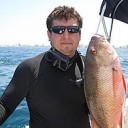
This looks really painful. Not sure who the diver is but I think they are with Florida Freedivers. Get well soon!


It looks like some of our friends in Miami are having some trouble identifying their targets
This looks really painful. Not sure who the diver is but I think they are with Florida Freedivers. Get well soon!
A lot of that is preference and has to do with specific limitations for each builder. For instance if you cant or dont want to tie bands then ferrules are obviously out. Also the tools you have available and the builders experience with them will often determine which setup he chooses. If you were to search enclosed track vs open track you will find hundreds of discussions where people way the pros and cons of each. There is a lot of information on this board that has already been discussed in multiple threads. A lot of times choices are determined by what is available and what the individual builder wants to try. If you can post how you plan on using the gun I can give you information specific to your situation.
Gun building is very personal and more of an art than a science. If you search through some of the gun building threads you sill find some beautifully crafted guns that look as good on a wall as they do in the water. And you find some others that are made to take a beating and are very simple. Its all up to you.
Read through these posts. They should answer a lot of your questions
I think what your trying to relay is a higher percentage of carbon fiber to fiberglass. The Leaderfins are made up of a couple layers of fiberglass sandwiched between two (or more) pieces of carbon fiber. Varying the fiber to resin ratio will also adjust the properties of the composite but in a different way than changing the type of fiber. If the NS blades actually have a higher percentage of carbon then they should provide better performance than the "regular" Leaderfins. It would also be justification for a price difference.
The fiber to resin ratio is more a result of the manufacturing technique than anything. Hand laid composites will have a slightly higher ratio of resin to fiber than a vacuum layup. Generally you want less resin and more fiber.
I think they got the idea for the Dos Equis comercials from Don's photo albums. <img src= " class="smiley" srcset="https://spearfishing.world/forum/images/smilies/emojione/1f606@2x.png 2x" height="23" width="23" loading="eager" data-tooltip="biggrin" aria-label="biggrin">
It would be interesting to find out. I think it would depend heavily on what type of line you had. I would imagine its more difficult for a stiffer line to get tangled. Also, the amount of slack and the angle of the impact would play a big role. It would be interesting to test. lol. I would really hope that this doesnt happen too often. Im not sure which I would be more upset about, the fact that they ran so close to a diver in the water, or the fact that they ruined my gear.
I think I saw him in a set of Spierre carbons in one of his videos but I dont know if thats current.
Wow Dan!!! +1 for the R&D. They look interesting and I would love to try them. Unfortunately Im stuck in Atlanta for school. Maybe Ill get a chance to try them over spring break. Ive seen those fiberglass blades and would agree if the Pursuit blades cant handle it then nothing on the market can. My only concern is how the pocket comes to a point, but I think that the blade should handle it.
His lanyard come off and he drifted so far off that when he looked around to find his line he ended up coming up on the wrong line. I think she was breathing up about to start her dive when the guy popped up like everything was cool and disrupted everything.
I cant do the ultra small pockets either. I guess Im not "dedicated" enough. I know we arent really designed have fins attached to us but the give comes from the blade not in the sole. If the blade were made to stiff then you would run into issues with ankle strain.
Fish tails dont work the same way that long fins do.
There's nothing more expensive about it than manufacturing conventional carbon or fiberglass blades. You just have to figure out the correct layup. As it is the back edge of the blade goes back pretty far towards the heel. I have a fiberglass blade here that would take the stress. It's not a big deal to install it in a foopocket with the tendons cut off. I can do it if you want to try it. I guarantee you will not like the feeling of the blade trying to pull away from your foot right under the toes, which is what will happen when it's stiff enough to handle the stress without the support of the tendons.
The expense would result because you would need a lot of overhead. In order for that design to work you would need a slightly different (longer or shorter) blade for each size footpocket. As a result you would need quite a few different molds for layup and all of those costs would be transferred to an already expensive product.
As for simply cutting of the tendons and testing it wouldn't give the same result. Those pockets are designed to transfer energy through the tendons. They have thick and stiff sidewalls and relatively soft sole. Many of them also soften as they get to the heel. As a result the footpocket wouldn't transfer nearly as much power because it isn't designed to do it that way. As for the the comfort and feeling of the blade pulling away beneath your toes, I don't think that would be the case because of how rigid the sole would be. with a properly fit pocket or something like what sporasub designed (the shoe) the pull would be distributed across the top of the foot and against the heel. I would agree it would still give a different feel from what is on the market now but if it shows to be a noticeable improvement over existing design I think people will rapidly adjust. Especially, some of the top freedivers who are known to wear footpockets a couple sizes to small so that they get maximum energy transfer, sacrificing comfort for efficiency. It was an adjustment to get used to carbon over plastic but now that I made the transition the carbons are what feel best.
By the way sorry for hijacking this thread. Dan, would you be able to move part of this thread to its own thread? Maybe a fin design discussion section?
It would be really stiff at that point but could taper off very quickly. I dont know if your familiar with the new jigging rods for H&L fishing, the butt of the rod is really stout but the tip remains really flexible. It would take a little modification to the design and the point where peak forces are would have to be moved back toward the ball of the foot instead of out past the toes. It would be a fine balance and could be difficult to offer varying stiffnesses but it should be possible. Expensive but possible.
It may weigh a lot but the flap does a good job of distributing the forces of the kick without hampering the ability of the carbon to return to shape. It also allows the fin to gain width quickly without excessive length.
As for the sporasub fins I have to disagree with the choice of material. If they had layered the carbon sufficiently so that it could sustain the force and distribute it through the blade (think like the leaf spring on a car) then they would have a very efficient, albeit extremely expensive, fin. Unfortunately for that to work properly the blade would have to be full foot and have a different style of attachment. The plastic simply cant hold up to that level of stress over a lot of cycles.

I will not argue with that. The only counterpoint I would add is, which would you rather run a marathon with: a lighter shoe that does not fit well, or a slightly heavier one that is comfortable. I won't pretend to see an advantage to the added weight though.
I would agree that better fitting outweighs an extremely light fin. If the Pathos dont fit then I would suggest a different pocket but if they do then I think lighter is better.
I understand that, but I still would like to see some data before I'm willing to say that the fin pocket is hampering my blade's performance. Each blade is obviously different, but I would say most benefit from some tendon (although I could be wrong, I haven't actually tried every blade). Additionally, I don't think it's all "snap" we're looking for. I think that simplifies it a bit too much. If that were the case, one patch of carbon where the flex happens would be all you needed, the rest could be any material right, provided the carbon could snap it back into place? I read an article (which I might look for later) positing that you actually want to create a sine wave. In fact, if you could manage it, you would want multiple sine waves. Feel free to correct me here, because I'm just a secondary source on that information (information I don't really understand at that). That's more the realm of hydrophysicists or something... I'm just a fisherman.
The elasticity of an object is a measure of how well it returns to shape after it has been deformed. If you compare the elasticity of rubber or plastic to that of a composite material you could compare how well each material could store the energy. If you were to have just one piece of carbon and another material than anything with a lower elasticity would "slow" the carbon down and prevent maximum energy storage.
Without researching the article the sine wave sounds about right as it is the most efficient form of a wave. Becaeuse of how carbon and other composites store energy they would approach a sine wave but if one half of the composite was affected in its flex by rubber and other materials than it couldnt form that wave properly. The longer carbon blades are more efficient because one they move more water but also because less of their total length is effected by the tendons. If you look at c4 pockets they dont have any tendons (they have water channeling rails) but the blade is allowed to store as much energy as possible. The purpose of a footpocket is to transfer as much energy as possible to the blade as easily as possible. Sporasub tried to exaggerate this concept with one of its fins (the one that looks like a shoe) but they made a critical error in blade material. The plastic they chose simply couldnt hold up.
I’m not sure about the multiple sine waves, ideally if you could get the wave to propagate properly multiple waves would work but it would be extremely hard if not impossible to accomplish. Some of the problems that afflict current footpocket designs are the trade offs manufacturers are forced to make. Ideally you would have a pocket made from a mold of each foot but its obvious why that doesnt work for a production product.
I would really like to see if someone could come up with a test that could show a measurable difference in footpocket/fin design but it would nearly impossible to set up objectively. Ive also considered trying to make a custom pocket for my own feet and the idea of having a carbon blade that extended through the heel of the foot and instead of mechanical attachment like screws or some kind of lock actually have the blade integrated into the rubber (or other material) of the pocket. It would make an ideal fin but would be very difficult to do and very expensive to try.
Ive always tried to keep the fish as dry as possible up to the point that I freeze them in a little bit of water. I think as long as the fish doesnt soak up the water before its frozen it should be fine. Its worked well for me so far.
Also on my mind was the stiffness of the ribs. Clearly a fin will not flex as drastically when braced by a thicker rib, but given that fact alone I am hesitant to make the statement that the pockets reduce the performance of the fin. I have had fins (Esclapez, for the record) that bend just beyond the toes (such as you would expect to happen with a soft rail) and in my judgement they were the worst fins I have ever used. I'd like to see some empirical evidence on the rails' effect on fin performance... and then if it shows I'm wrong, I'll gladly admit it.
A couple things to keep in mind with the fin rails aka tendons. One is that thicker does not always mean stiffer. The other has to do with the nature of a composite fin. The reason that fiberglass and carbon fiber blades are superior to plastic is there ability to store energy and return to their original shape. This is often referred to as the "snappiness" of a fin. Plastic fins dissipate some of the energy that goes into deforming them and also do not return completely to their original shape. This waste of energy is known as dampening and is why plastics and rubber are used as shock absorbers and bushings. To use your example of the esclapez fins. They have a very long tendon that has a lot of material. This tendon negates most, if not all, of the advantage gained from putting a carbon fiber blade in that pocket. If you look at some of the top foot pockets, like the c4 and Pathos pockets, there is little or no tendon. The pathos have a very small and flexible tendon that allows the blade to do all the work. The C4 pockets dont have a tendon at all.
As for the weight of the footpocket, its not so much that the heavier pockets are "too heavy" and more that the ultra light ones are reaalllllyyyy nice. In your toothbrush analogy you have a very short duration. Try looking at a day of spearfishing as more of an endurance race. There arent any footpockets (to my knowledge) that are so heavy that they cant be kicked by an average diver or that will make you sink. However, if you had to run a marathon would you choose a set of really heavy hiking boots, (which arent too heavy to walk in) or a set of top of the line running shoes? Also in a sport were efficiency is very important, the less energy spent accelerating a foot pocket, the more is put into moving water. It may not seem like a lot but my pursuit 90's in pathos pockets are roughly half the weight of my cressi garas and over the course of a day with a few thousand kicks it adds up.
The comfort of the pocket is completely a personal choice. I love my garas they are the most comfortable fins I have every owned but after a few dives to adjust to the carbon blades, the Pathos pockets are a close second. Initially I had a little pain because I have a high arch and the pocket is a little flat but my foot has adjusted and the pockets have been broken in a bit. They now fit and feel great.
What size foot pockets?
Those are some awesome pics. What camera were they taken with?
Welcome to the board William. Sounds like you have all the tools you need to start the build. Just a couple tips. Do some research on some different woods, techniques, finishes etc. Heres a good place to start.
http://spearfishing.world/spea…3-gun-building-101-a.html
I would suggest having a very good idea of what you want your finished product to be and what your going to use it for. Remember that building a custom gun is usually more expensive that buying one so make sure that the one you build is one you will use. Good Luck!
Also +1 for WoodGuy He made the blank for my first gun build and you cannot find a straiter piece of wood or a more helpful guy. He kept me up to date with the lamination and even provided pics as he worked on the stock.
I just have to say these suits are awesome. I have a 3mm and it is unbelievably comfortable. Once I put it on to start the day It doenst come off. I can wear it all day. I have seen quite a few different wetsuits and I have yet to see a wetsuit that rivals the quality, for a comparable price.
Great Product Dan !!!