

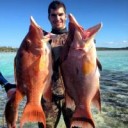

Don Is this the "snubber release hole" you are talking about? I think this is actually a line anchor but your point is definitely still valid and I agree. Even if it were to simply be bent forward there would still be a small chance for the line to get caught in the crease between the metal and wood. Such a minor detail that only an experience I would catch.
Posts by Wishihadgills
-
-
In my defense I did wear a mask while applying the epoxy. <img src= " height="23" srcset="https://spearfishing.world/forum/images/smilies/emojione/1f606@2x.png 2x">
Mark the gun is coming along fast and it looks great. Seeing you make so much progress making me anxious to work on mine. Can't wait to see the finished product.
Dan, there has been a lot of interesting and helpful information in this thread. I think it would make a good addition to the Gunbuilding 101 thread.
-
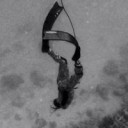
Okay I'll ask a dumb question. What does a bad epoxy job cause? How bad does it look? Will it still protect the gun?
Mark. After reading the article I would wonder. If you use 5%xylene in the west solutions and put on four or five coats. Don't you think it is better than oil? Even with the reduced impact protection and reduced water resistance it is still better than oil right?
A bad epoxy job looks terrible. The surface is uneven and looks like the epoxy has avoided certain parts of the wood. There may also be bubbles and other debris in the coating. Even a bad epoxy job will protect the wood where it has made a bond. The fish eye spots are not protected properly and if there is poor adhesion to the surface it will not last very long.
A thinned epoxy coating on a naturally water/rot resistant wood like teak will probably be just fine. the natural oil in the wood will hold up and even a porous and weakened epoxy is stronger than oil. On woods that are not as naturally suited for the water this will not be the case and the thinned epoxy may trap water and foo more harm than good.
I know first hand how difficult an epoxy finish can be to get right. Many custom builders do not take the time to get a flawless finish. Even many of the most respected brands out there. However if you put in the time you will get a superior finish with epoxy.
-
WEST SYSTEM - Projects - Thinning WEST SYSTEM epoxy
I highly recommend you read this if you choose to use epoxy. Ill edit this post tonight and pull some of the more importnant data for those who dont have time to read the whole thing or in case the url changes.
As promised:
"3) Water resistance of a piece of wood is not enhanced by deep penetration. Wrapping wood in plastic makes a pretty good waterproof seal without any penetration at all. Likewise, an epoxy coating on the surface is more water-resistant than a thinned epoxy coating that has penetrated deeply into the wood because, in most instances, the epoxy thinned with solvent is porous."
"Adding 5% lacquer thinner to epoxy reduces the epoxy’s compressive strength by 35%—a big hit in the mechanical properties of WEST SYSTEM epoxy (Figure 5). The addition of more than 5% solvent results in an excessively flexible cured material. Thinning epoxy with solvent causes enough loss of strength that we (and most other reputable epoxy formulators) cannot recommend using it as a structural adhesive."

The two largest advantages of an epoxy coating are its water resistance and strength. The testing done by west systems and many other epoxy companies have shown that thinning epoxy with a solvent compromises both of these properties. There are application where a thinned epoxy is useful such as with rotten wood but this is not the case for speargun coatings.
-
Pressure = Force/Area. If the area of the lens were substantially smaller than there would be less force on the goggles but he would also not be able to see very well. In the video they didnt look like the lenses were that small. the thicker rim could distribute the force over a larger area and make for less pressure on the tissue but not any more than the plastic flange and rubber/foam on normal goggles.
-
For bending the muzzle I would use a vice and a piece of steel pipe the diameter I want. Then using some vice grips or pliers bend the plate around the pipe (mandrel) until its the right shape.
-
I agree with Dan I doubt he actually walks around on the bottom. It seems wildly inefficient and he would know that. He would also want to avoid any kind of injury as medical attention would be pretty difficult to obtain. Regardless impressive diving.
As far as the goggles it is probably something he has just adjusted to with time. There are a couple companies that started making them after this came out. The pain from goggle squeeze comes from the difference in pressure between the air inside and the water outside. These forces will always balance or something will fail. When a balloon or float changes size (compresses) the same amount of air now occupies a smaller area and the pressure inside matches the pressure outside. In a mask or or goggles the force necessary to match the water pressure comes from two place. The air inside the masks/goggles and your face. In the case of the mask you can add air to balance the pressure. In the case of googles the additional force needed comes from your face. If that force gets too high it hurts and eventually damage the tissue (bruise). You can toughen tissue over time so it can withstand more force. There is no magic combination of materials that can get around that.
-
Well I'll add my .02.
I went the direction of the gloss epoxy finish and as mentioned it is a PITA to get right. I like to think I did a pretty good job and a few guys on here who have seen it in person can add their opinions. The oil finish is probably the easiest initial application but requires more maintenance down the line. Scratches and dings can damage the wood itself but they aren't as noticeable as some of the other applications. I have heard from multiple sources that thinning epoxy is not a good idea but it definitely makes it easier to apply. the downside is it does not build up a thick layer as quickly and scratches are not only noticeable but can damage the wood. The gloss finish is the hardest to achieve but if you put the time and effort in your prep can be done and is very thick. I have had a gloss finish on my gun and aside from a few very deep scratches it does not show most of the minor damage. If I wanted a matte finish I would use the same method as if I wanted a gloss finish and just sand it evenly by hand. This will eliminate the difficulties of a gloss finish by giving you the ability to sand out any imperfections but you will still have a nice thick protective layer.
Refinishing epoxy is not particularly difficult. Just a general sanding to allow for a mechanical bond and reapply. Its the same as with oil except achieving the perfect gloss finish can be difficult but if you're fine with matte than this isn't an issue.
I am currently working on a gun that I plan to epoxy and then sand/buff to a very high gloss. It will definitely be labor intensive but hopefully not as bad as the 12 or so coats I had to put on the first gun before I was happy. Part of the reason for this choice is the materials that I am using (maple and carbon fiber). If I built a gun out of all teak I would probably go with an oil finish.
-
If you watch the video in 720 on a full screen you can see the shark has a line wrapped around its pec fin. Not sure if that is what you are referring to though.
The only way to help avoid missing some of the crazy sh!!!t that goes on is to have the camera running all the time. Its a little bulkier and can make it hard to find the interesting stuff after a long day. I still find that murphy's law manages to prevent some of the coolest things that happen from being caught on film.
-
I had .5" of wood between holes. probably overkill, but better safe than sorry. I was also planning for 5/8" bands though. Been a couple years and haven't had any issues.
-
Are you wrapping wood in CF or is it made entirely from CF then painted?
-
Well I don't think I classify as a beginner anymore but I have been to a few blue wilds as I gained experience so I might have an interesting perspective.
My first Blue Wild I was not unlike a kid in a candy store. having only been diving a short time seeing that collection of gear was impressive. It was also interesting to see some of the presentations from people that I really looked up to in and out of the sport.
The following summer, I took a job at a local dive shop and learned more about the industry in a couple months than a lot of people do in a couple years. Looking back at my first experience, I realized I didn't learn all that much but it was still pretty cool.
Fast forward another year and I had worked at the same shop again for another summer and had now personally met and worked with many of the people that are "celebrities" at the show. Going to the show this time was more like hanging out with a bunch of friends than anything else. There are a few new products that are released each year at the show and it is cool to see the work from the artists, gunmakers etc but the last time I went I think I was most interested in the raffle.
I have been a total of three times. I did not go this year because I attend college out of state and like a few others have noted it was not worth it to fly in for the weekend. I can also understand how from the perspective of an insider, like Dan, who knows about everything going on in the industry anyway, how the show is not particularly intriguing. I do think the importance of the show has been a little understated in this particular thread. Like mentioned in another thread I find it very important for all spearfishermen to "stick together." I think this is one of the largest if not only spearfishing convention in the US and it does bring people from many states and different clubs together. I did enjoy getting to meet people behind the screen name as well though.
And while not as big or innovative as some of the boat shows have become this show has a a much closer knit community and unlike those shows I know a lot of the people there. Also when it happens to fall on a weekend with crap weather like it did last year it ends up being a pretty good second to going diving.
Overall there is a lot of room for improvement but its a pretty small and relatively new. I hope that it can continue to grow and become a true expo.
-
Where do you feel pressure/contact in the cressi pockets? They are known to be a little narrow. All of the pockets fit a bit different. Its hard to recommend a pocket over the internet. My advice is to go somewhere that has a lot of pockets available and try them on.
-
Yes, commercial fishing is far more impactful (read detrimental) to fish populations than recreational fishing.
You are correct when you say that if fish are not allowed to breed they will eventually become extinct. On this point, if it was determined that a certain species reached maturity at 12" and grew at a rate of roughly 1" per year and reproduce one time per year. Then making the minimum length greater than 18" should allow this particular fish to reproduce about 6 times. If fish are being harvested before they are allowed to breed it needs to be changed. Now for a fish that doesn't grow much beyond it mature size then you would need to determine its rate of reproduction and make sure the bag limit is well below its reproductive rate.
Another issue I see with your argument is that scuba divers can venture significantly deeper than freedivers. A basic open water certification certifies a diver to 60 ft. Not very deep. Advanced open water to 130'. Anything beyond that you are into technical diving and the risks become so high that very few would risk the complications that spearfishing adds. Now you might say that most divers can't free dive to those depths and you would be correct but that does not prevent divers from fishing those depths. I can personally touch just past 100' but I have fished wrecks that sit in 140'. If you use chum and other attractors you can harvest fish in these depths. Having worked in a dive shop there are not that many people that venture much beyond 80-100 ft on scuba.
It's a complicated subject and honestly the people making the rules are usually the worst informed. They are politicians who are influenced heavily by commercial interests and rely on imperfect science that does not accurately reflect what the people on the water are experiencing.
I also agree that human pollution is possibly the most detrimental force to the entire planet not just fish but as you mentioned it is so far out of are control I was not really considering it.
-
Ok I'll bite.
I agree with you on the fact that scuba spearfishing is not for me. I don't feel agile or stealthy and I personally don't think it is as challenging.
Thats probably where your reasoning falls apart. I agree that fish in SFL waters are overfished but I would venture to say (I can't really back this up) that most spear fisherman in this area are free diving not using scuba to harvest fish. The hardest fished areas are the reef between 15 and 60 ft. And like you mentioned this a range that many weekend warriors can reach without much skill which makes it very easy for people who are not scuba certified and don't have their own scuba gear. Both are pretty big limitations on how many people are actually scuba diving.
The current regulations still need to change. Even if scuba spearing was dramatically more effective than freediving the regulations should be set up in such a way that a diver could catch the limit and the species still be sustainable. This is currently not the case. If you want to say that people disregard limits you would be correct but I doubt you could say that either scuba or freedivers were any more likely to do this. I have seen some pretty gross pics from both parties. Enforcement is really lacking and there is a lack of information on what limits are needed to help fish. For instance red snapper in the Gulf.
The other issue that is completely ignored in your statement is the relative impact of recreational spearfisherman on the fish populations. The biggest impact on fish species is by far commercial fishing. Their catch numbers dwarf recreational numbers not to mention that spearfishing only makes up a small portion of recreational fishing and scuba spearfishing an even smaller subset of spearfishermen.
If your argument were simply that scuba spearfishing should not be allowed because it is not fair you would find a very heated debate, but there would be pros and cons for both sides. (I won't go there)
However, your argument seems to be that eliminating scuba spearfishing will restore fish populations to their glory days and in that regard I think you are incorrect. My retort would be that scuba spearfishing makes up a very small portion of the total fish catch. Far too small to have a significant impact on the overall health of the fisheries.
-
Trying not to sound rude but I think you need to do a bit more research. Setting depth limits will in no way protect you from a blackout. The cause of blackouts is pushing your limits, this can be diving to 65+ or this could be in 30 ft. If you tried to do a 2 min + dive in 65ft you run more risk than a 1 min dive to 70. Of course there are many other factors that contribute but I just wanted to clear up this one.
The closest I have ever seen a dive buddy get to blacking out was in 20ft of water lobstering. He was chasing a particularly elusive lobster all around a little rock. He started to come up and the lobster came out so he went back down after it. Seeing this from the surface and knowing my friend was pushing it, I was prepared and ready if something happened. When he eventually did come to the surface I immediately grabbed him under the armpit and supported him. He just stared at me blankly for a good five seconds. Eventually he snapped out of it and realized what was going on. He didn't black out but he was damn close. He would have been in trouble if I wasn't there.
I didn't include this story to scare you or dissuade you from diving beyond 65. I personally love diving deep. Pushing myself and enjoying the environment are two of my favorite aspects of diving. But every time we dive there is risk involved. I wish there was a way to say "if you stay less than this depth for x amount of time you will be fine" but it simply doesn't work that way. You need to learn to understand your body and feelings. It will help a lot.
Good luck and stay safe.
-
Mahogany is generally not laminated but it is usually finished with epoxy. If it is coated in epoxy there will be a little bit of water intrusion around the screw holes if you do not seal the hole. If you do not plan on removing the reel once you have put it on the gun then you can simply use a dab of 5 minute epoxy on the screws when you put them in. If you plan on removing the reel frequently (a lot of people think they will do this but from experience they usually don't) you can use threaded inserts. You have to drill a slightly larger hole and then seal them with the same method as above.
-
The larger crimpers and the bench top versions have stops that prevent over crimping and give you more than enough leverage to prevent under crimping. It is still possible to get bad crimps with these tools. Mono has a wide variation of diameters for the same breaking strength and you need to match the diameter with the correct sleeve. With the small hand held crimpers the correct pressure is a skill.
-
Use final cut pro. You have much better compression settings and a lot more editing options.
-
Very true hank. I learned my crimping skills for hook and line fishing where the connection strength is everything. With reef hunting you can get away with a decent crimp but for blue water you shooting line will most likely be the weakest link especially if the crimps aren't solid.