


Here are a few pictures of the finished gun.
Posts by Guest
-
-
Good point. It certainly could have been the crimp.
-
Very nice. We have 8' seas here right now.
-
Like you said, who knows. The wishbones may not have any power from the constricting of the bands, but they've got a bunch of forward momentum.
-

I have no experience with it but yes I think it could be a problem. I believe you will see wear in the areas where the tab can catch on the top of the track. I wouldn't make the muzzle with an enclosed track to go with that tube. Lets see what happens.
Oops. Don't know whether it was the sharkfins on the shaft, or the hard wire wishbones, but the enclosed muzzle didn't work out. This was the first shot.
I'm kind of inclined to think it was the wishbones, since there is damage to both sides. It seems to me that if the shaft were rotated to one side (and the damage caused by the fins), then the damage would be only on one side. But I'm not in the mood to make another muzzle to test that. I'll just go with my open design.
-
Dan - Do you have any way to determine how long the rubber plugs at each end are? If so, you might be able to drill into the plug a little, and insert a lead weight, without compromising the watertight integrity.
-
I don't remember what specific gravity that mixture ended up. We don't have any numbers yet, but I bet that gun will require something around 0.3 or less to float without the shaft.
Dan - I assume that you don't need any reserve buoyancy to float with a reel as well?
-
Jeff, remember we had good results getting the density down by using Polywood and foaming it by adding a little water to the mix. While not a perfect syntactic at that point, if plugs were still used in the ends of the barrel I think it would be fine.
-
A true mix and pour syntactic (hollow glass or ceramic spheres in a resin matrix) would almost certainly be too heavy. We never got the Polywood down to its specified specific gravity of 0.5 g/cc.
I think your best bet if you want to fill the barrel would be a two-part polyurethane foam in a 4 or 8 lb/cubic foot density. You could always drill into the ends of the foam and insert more weight if required.
The only other way that I can think of to estimate the volume of the barrel is to immerse the barrel (no muzzle or handle) in a small pipe full of water and measure the displacement by the change in water level. This is obviously a measure of the outside volume, but if the wall is relatively thin, then it would probably still provide a reasonable estimate. You could always "adjust" the estimate by measuring the inside and outside area at the end of the barrel, and scaling the total volume by the same ratio.
-
I agree. We need to know two things.
First, we need to know how much extra weight it can float. As Chad said, you can easily figure this out by attaching fishing weights with rubber bands, or something similary.
Then we need to know the internal volume. If it is a straight cylindrical bore, then we just need length and inside diamter. If that barrel is not straight (is it wider in the middle?), then you would probably need to measure the internal volume directly by removing a plug and filling it with a measured amount of water.
-
Dan, the best way to figure it out will probably be to see how much weight you can add to the gun without sinking it.
With the barrel ID and length Jeff or I could then figure out whether or not it would still float if filled with syntactic.
I'm assuming that the barrel is currently filled with air.
-
Looks great John! But don't sand it. It's much easier to smooth if you just briefly dip it in fairly hot (about 170°F) water. Not long enough to soften the whole thing. Just a minute or so will soften just the outer surface, and allow you to smooth it without changing the shape of the grip.
If you rub it with a dry hand, you'll get a smooth surface. If you pat it with a threadbare towel, or something equivalent, you can easily create a slightly rougher, textured surface.
Either way, the trick is to heat it just enough to work the surface.
-
-
Maybe. My chief concern isn't the flight of the spear through the water. You are absolutely right that a pole spear is a short range device, and the energy lost to the drag of the flopper is nothing compared that of the big ol' shaft punching through the water.
What I am trying to maximize is the penetration. I figured that a more streamlined flopper would be more likely to push all the way through a larger fish for a more secure hold.
-
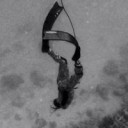
. . . that ALS direct spear looks promising Jeff...you could make that
Yeah. It does streamline things, but you still have a section of the shaft of a larger diameter that must be pushed through the water. I think that I'm going to cut flats on the shaft, and recess a squared off flopper, so that the total cross section of the shaft stays nearly constant.
Only problem so far is that I'm finding it pretty tough to hammer a rounded flopper into a squarish shape. I think I'll be better off starting from scratch.
-
-

btw the grouper in my avatar was taken with your gun.
Woo Hoo! That just made my day! Thanks Steve.
-
-
-

Did you know the mat camo finish on the P51 killed a small percentage of top speed ?
Makes sense. Maybe we should wax our shafts like Americas Cup racing yachts wax their hulls?